Introduction
Walk into any beautifully designed home and you can feel it instantly. The mood, the comfort, the personality—it all comes together through thoughtful design choices. That’s why interior design styles matter far more than most people realize.
In reality, choosing the right style isn’t about following trends or copying Pinterest boards. It’s about creating a space that reflects how you live, what you value, and how you want to feel when you walk through the door at the end of a long day.
However, with so many styles—modern, minimalist, traditional, bohemian, industrial—it’s easy to feel overwhelmed. That confusion often leads to mismatched furniture, wasted money, and a home that never quite feels “finished.”
This guide breaks down interior design styles in a clear, human way—so you can confidently identify what works for you and apply it beautifully in real life.

Modern Interior Design Style
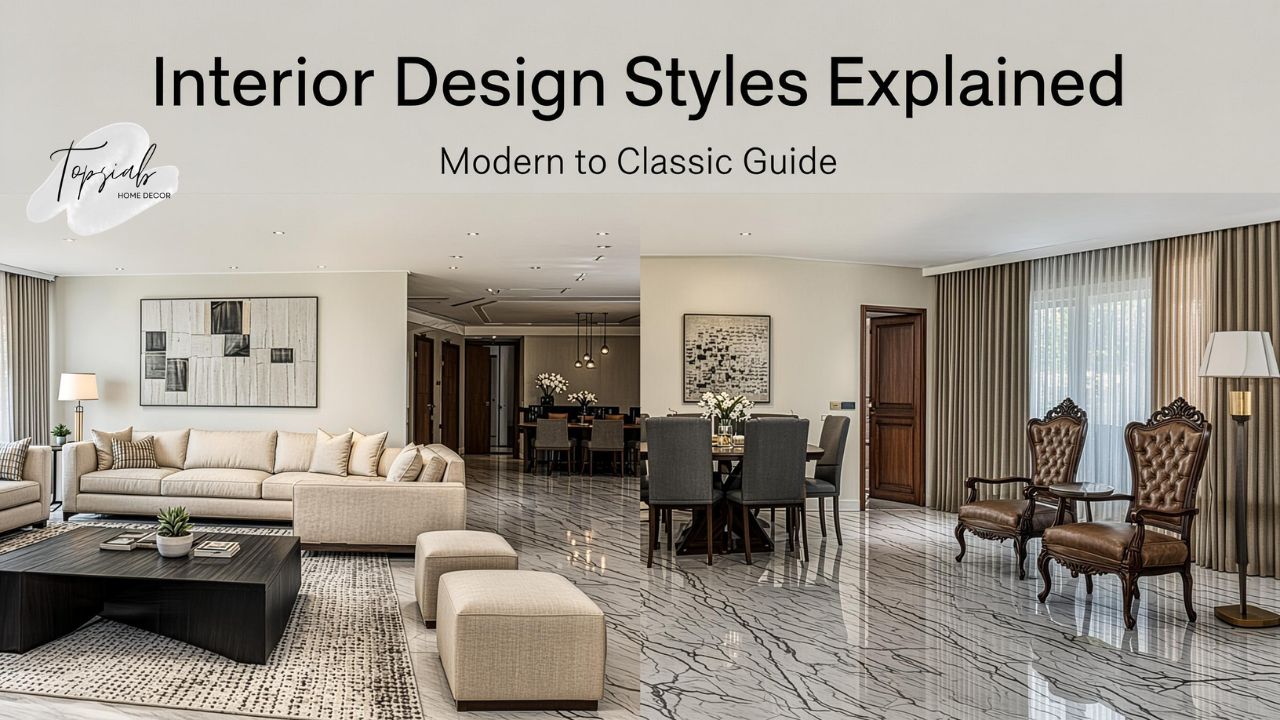
Modern design originated in the early to mid-20th century and is rooted in simplicity, function, and clean lines. It rejects ornamentation in favor of clarity and purpose.
Key Characteristics
- Neutral color palettes (white, black, gray)
- Sleek furniture with smooth surfaces
- Open floor plans
- Natural materials like wood and stone
Modern spaces feel calm, organized, and intentional. In homes where clutter feels stressful, modern design offers breathing room—both visually and emotionally.
Contemporary Interior Design Style
Contemporary design is often confused with modern, but they are not the same. Contemporary evolves with current trends, whereas modern is historically rooted.
Defining Features
- Curved lines mixed with straight forms
- Bold accent colors used sparingly
- Statement lighting fixtures
- A blend of materials and textures
That said, contemporary interiors feel fresh and flexible—perfect for homeowners who like updating their space every few years.

Minimalist Interior Design Style
Minimalism is built on the idea that less is more. It focuses on essentials and eliminates visual noise.
What Defines Minimalism
- Limited color palette
- Functional furniture only
- Clean, open spaces
- Hidden storage solutions
Minimalist interiors often appeal to people who crave mental clarity. A simplified environment can genuinely reduce stress and decision fatigue.
Scandinavian Interior Design Style
Scandinavian design emerged from Nordic countries, where long winters demanded warm, functional, and inviting interiors.
Signature Elements
- Light woods and white walls
- Soft textiles like wool and linen
- Cozy lighting
- Functional layouts
This style balances beauty and practicality, making it one of the most livable interior design styles worldwide.
Traditional Interior Design Style
Traditional interiors are timeless, elegant, and rooted in European design principles.
Classic Features
- Rich wood tones
- Symmetrical layouts
- Detailed moldings
- Antique or heirloom furniture
Traditional design works beautifully for homeowners who value history, formality, and craftsmanship.
Transitional Interior Design Style
Transitional design blends traditional warmth with modern simplicity.
Why It Works
- Neutral color schemes
- Clean-lined furniture with classic influences
- Minimal ornamentation
- Comfortable, layered spaces
This is one of the safest interior design styles for long-term satisfaction because it rarely feels outdated.
Industrial Interior Design Style
Inspired by warehouses and factories, industrial design celebrates rawness.
Defining Traits
- Exposed brick and concrete
- Metal fixtures
- Open ceilings
- Neutral, moody colors
Industrial spaces feel bold and urban, appealing to those who prefer character over polish.
Rustic Interior Design Style
Rustic design brings nature indoors.
Core Elements
- Reclaimed wood
- Stone fireplaces
- Earthy colors
- Handcrafted furniture
This style creates warmth and emotional comfort, especially in countryside or mountain homes.
Bohemian Interior Design Style
Bohemian interiors are expressive, colorful, and rule-free.
Boho Essentials
- Layered textiles
- Global patterns
- Mixed furniture styles
- Plants everywhere
Boho design thrives on personality and storytelling—no two spaces look the same.
Coastal Interior Design Style
Coastal design captures the calm of the seaside.
Typical Features
- Soft blues and whites
- Natural light
- Linen fabrics
- Casual furniture
Even homes far from the ocean can benefit from its relaxing energy.
Art Deco Interior Design Style
Art Deco is glamorous, bold, and luxurious.
Hallmarks
- Geometric patterns
- Metallic finishes
- Rich colors
- Statement furniture
This style suits confident homeowners who want drama and sophistication.
Farmhouse Interior Design Style
Farmhouse blends rustic charm with modern comfort.
Common Elements
- Shiplap walls
- Neutral palettes
- Vintage accents
- Cozy textiles
It’s approachable, warm, and family-friendly—one reason it remains popular.
How to Choose the Right Interior Design Style
Choosing between interior design styles starts with self-awareness.
Ask Yourself:
- How do I want my home to feel?
- Do I prefer structure or flexibility?
- How much maintenance am I comfortable with?
- What colors calm or energize me?
In reality, many homes blend multiple styles. The key is consistency—not perfection.

FAQs About Interior Design Styles
FAQ Section
What are the most popular interior design styles today?
Modern, contemporary, minimalist, Scandinavian, and farmhouse dominate current preferences.
Can I mix different interior design styles?
Yes, but successful mixing requires a unifying color palette and consistent materials.
Which interior design style is best for small homes?
Minimalist and Scandinavian styles maximize space and light.
Are interior design styles expensive to implement?
Not necessarily. Style depends more on choices than budget.
How often do interior design trends change?
Trends evolve every 5–10 years, but classic styles remain timeless.
Is hiring an interior designer necessary?
It helps, but many homeowners successfully design on their own with research and planning.
Which interior design style increases home value?
Transitional and modern styles appeal to the widest range of buyers.
Conclusion
Understanding interior design styles isn’t about labeling your home—it’s about creating a space that supports your life, your emotions, and your routines. When design aligns with who you are, your home stops being just a place to live and becomes a place to belong.
Whether you love clean modern lines or layered bohemian textures, the best design choice is the one that feels right every single day.