Introduction
There’s a quiet revolution happening inside modern homes—and it’s not just about gadgets anymore. Today’s living spaces are evolving into intelligent environments where technology blends seamlessly with aesthetics. That’s where smart home decoradtech steps in, reshaping how we design, decorate, and experience our homes.
In reality, homeowners no longer want visible wires, clunky devices, or tech that disrupts the visual harmony of a room. They want beauty and intelligence working together. smart home decoradtech answers this demand by merging interior design principles with advanced automation and connected technologies.
That said, this shift isn’t just about convenience. It’s about emotion, comfort, energy efficiency, and control—creating homes that respond intuitively to human needs while still looking warm, stylish, and personal.

What Is Smart Home Decoradtech?
Definition and Meaning
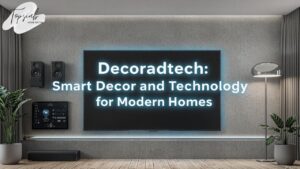
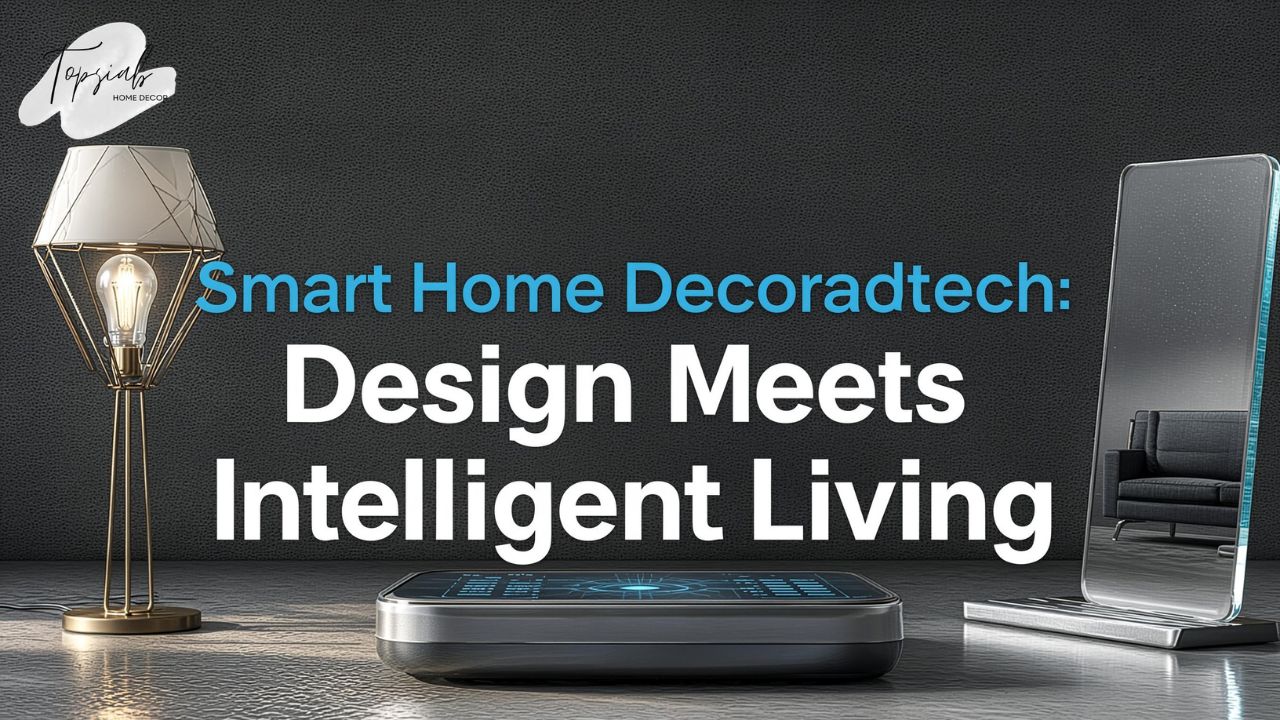
Smart home decoradtech refers to the strategic integration of smart technologies—such as IoT devices, automation systems, and AI-driven controls—directly into home décor and interior design elements. Instead of technology feeling “added on,” it becomes part of the design language.
Unlike traditional home automation, which often prioritizes function over form, decoradtech ensures that:
- Devices enhance aesthetics
- Technology remains subtle or invisible
- Design remains the primary focus
How It Differs from Traditional Smart Homes
Traditional smart homes focus on what technology can do. Decoradtech focuses on how it looks and feels while doing it.
| Traditional Smart Home | Smart Home Decoradtech |
|---|---|
| Visible devices | Hidden or design-integrated tech |
| Function-first | Design-first approach |
| Gadget-centric | Lifestyle-centric |
| Often cluttered | Clean, minimal aesthetics |
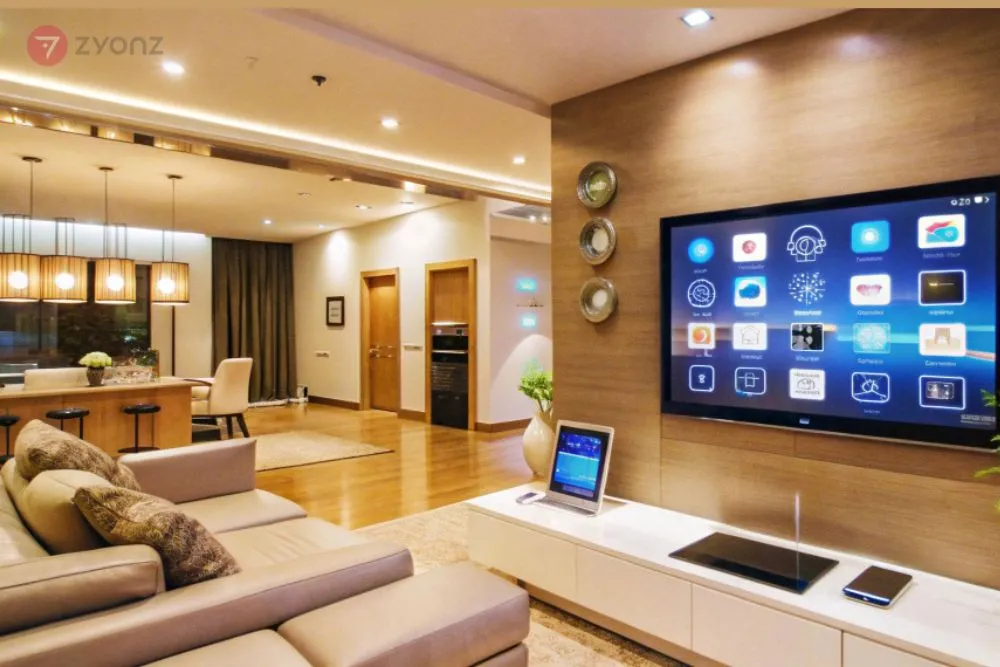
How Smart Home Decoradtech Is Transforming Interior Design
Design Meets Intelligence
Interior designers now collaborate closely with technologists. Lighting layouts consider circadian rhythms, wall finishes accommodate embedded speakers, and furniture design factors in wireless charging and sensor placement.
However, the real transformation lies in experience. Walk into a room, and lighting adjusts automatically. Curtains respond to sunlight. Temperature adapts to occupancy. All of this happens quietly, without interrupting the visual story of the space.
Emotional Impact on Living Spaces
Homes designed with smart home decoradtech feel calmer and more intuitive. People report:
- Reduced stress due to automation
- Improved sleep from adaptive lighting
- Greater sense of control and comfort
This emotional resonance is why decoradtech is rapidly becoming a core interior design philosophy rather than a tech trend.
Core Technologies Behind Smart Home Decoradtech
Internet of Things (IoT)
IoT forms the backbone of decoradtech. Everyday décor elements—lights, mirrors, thermostats, even wall art—connect through networks to communicate and respond intelligently.
Artificial Intelligence and Machine Learning
AI allows systems to learn behavior. Over time, your home understands:
- Preferred lighting tones
- Ideal room temperatures
- Daily routines
On the other hand, without AI, automation remains static and less human.
Voice and Gesture Control
Voice assistants and touchless controls reduce visual clutter. Instead of switches and remotes, design stays clean while control remains effortless.
Smart Materials and Surfaces
Innovative materials now integrate:
- Touch-sensitive walls
- Electrochromic glass
- LED-embedded panels
These materials are redefining what décor can do.
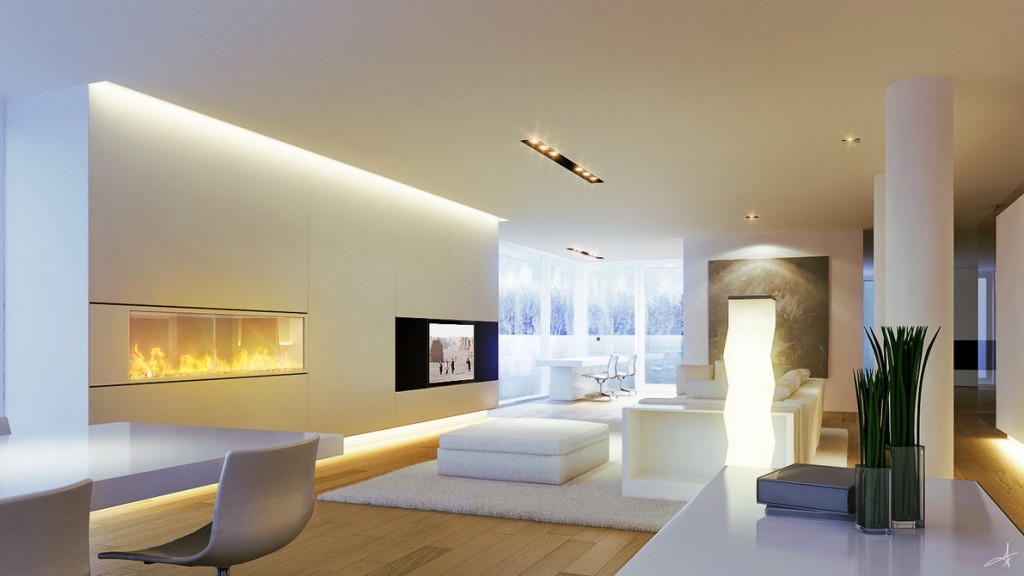
Smart Home Decoradtech Room-by-Room Applications
Living Room
The living room becomes an adaptive social hub:
- Smart lighting scenes for movies or gatherings
- Concealed speakers within walls or ceilings
- Climate control that adjusts based on occupancy
Bedroom
In bedrooms, smart home decoradtech prioritizes wellness:
- Warm lighting in the evening
- Automated blackout curtains
- Noise-masking smart panels
In reality, better sleep is one of the most cited benefits.
Kitchen
Smart kitchens blend efficiency with elegance:
- Minimalist smart appliances
- Touch-free faucets
- Ambient lighting integrated under cabinetry
Bathroom
Bathrooms embrace luxury through technology:
- Smart mirrors with ambient displays
- Heated floors with automated scheduling
- Moisture-responsive ventilation
Benefits of Adopting Smart Home Decoradtech
Aesthetic Harmony
Technology no longer disrupts design. It supports it.
Energy Efficiency
Smart systems reduce waste by responding in real time. According to industry data, automated lighting and climate systems can reduce energy use by up to 30%.
Personalization
Homes adapt to individuals, not the other way around.
Property Value
Homes designed with smart home decoradtech often command higher resale value due to future-ready infrastructure.
Design Principles for a Balanced Smart Home
Minimal Visibility
If technology is seen, it should feel intentional.
Layered Lighting Strategy
Combine ambient, task, and accent lighting with smart controls.
Neutral Color Palettes
They allow embedded technology to disappear visually.
Scalability
Design systems that grow with future upgrades.
Common Mistakes to Avoid in Smart Decor Integration
Overloading with Gadgets
More devices don’t equal a smarter home.
Ignoring Design Consistency
Mismatched tech ruins visual flow.
Poor Planning
Technology should be planned before décor installation, not after.
Vendor Lock-In
Avoid ecosystems that limit future flexibility.
Future Trends in Smart Home Decoradtech
Invisible Technology
Expect more hidden sensors and controls embedded directly into surfaces.
Sustainable Smart Design
Eco-friendly materials paired with energy-aware automation will dominate.
Emotional AI Homes
Homes that detect mood through voice, lighting preference, and behavior patterns.
Modular Decoradtech Systems
Plug-and-play design elements that evolve with lifestyle changes.
Frequently Asked Questions
Is smart home decoradtech expensive to implement?
Not necessarily. Costs vary widely, and modular systems allow gradual upgrades without full renovations.
Can smart home decoradtech work in small apartments?
Yes. In fact, compact spaces benefit the most from intelligent, space-saving design.
Does smart home decoradtech require constant internet access?
Basic functions may work offline, but advanced automation benefits from stable connectivity.
Is smart home decoradtech secure?
When properly configured with encrypted networks and updates, security risks are minimal.
Can existing homes be upgraded with smart home decoradtech?
Absolutely. Retrofitting is common and often easier than people expect.
Will smart decor technology become obsolete quickly?
Well-designed systems focus on software upgrades rather than hardware replacement.
Does decoradtech increase electricity consumption?
On the contrary, it often reduces overall energy use through optimization.
Is professional installation necessary?
Complex integrations benefit from professionals, but many systems are DIY-friendly.
Conclusion
Smart home decoradtech represents a fundamental shift in how we think about living spaces. It’s no longer about choosing between beauty and functionality—today’s homes can have both. When design and intelligence work together, homes feel more human, more responsive, and more alive.
As technology continues to evolve, the most successful homes won’t be the most automated—they’ll be the ones where technology quietly supports daily life without ever stealing the spotlight. That balance is the true promise of smart home decoradtech.